RU
RU  ES
ES  FR
FR  EN
EN  IT
IT 

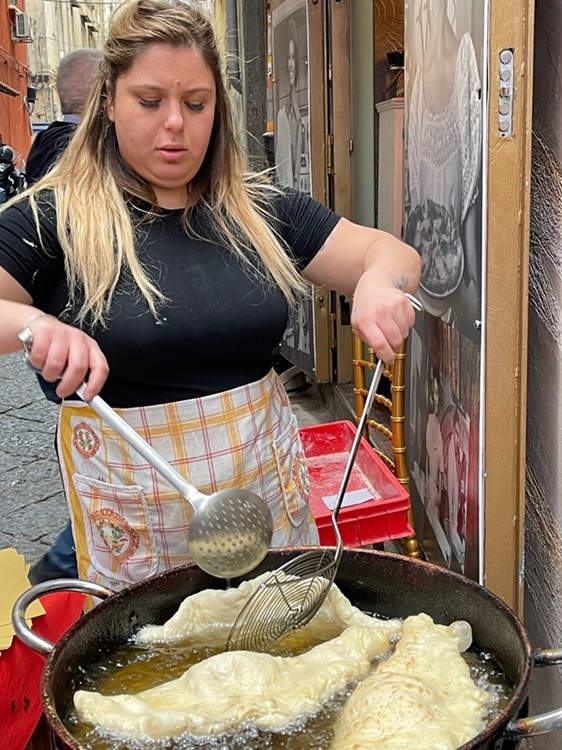
Neapolitan fried food is one of the easiest – and tastiest – ways to experience Naples like a local. Pasta frittatine, potato crocchè, zeppoline, fried polenta and pizza fritta are part of a street-food tradition that is still very much alive today.
You do not need to sit down at a restaurant. Step into a friggitoria, choose a few pieces from the counter or order a traditional cuoppo, the paper cone used to serve fried food in Naples.
Neapolitan fried food at a glance
| What to try | Pasta frittatina, potato crocchè, zeppoline, scagliozzi and pizza fritta |
| Best areas | Historic Centre, Pignasecca and Vomero |
| How to eat it | At the counter, takeaway or served in a traditional paper cuoppo |
| When | For a quick lunch, a snack while sightseeing or before dinner |
| Cuoppo di terra | Fried potato, pasta, rice, polenta and vegetables |
| Cuoppo di mare | Fried calamari, prawns, anchovies and other small fish |
What is a Neapolitan cuoppo?
A cuoppo is the traditional paper cone used in Naples to serve fried food. It is made for eating on the go, which makes it perfect for a quick stop while exploring the city.
There are two main versions. A cuoppo di terra usually contains crocchè, zeppoline, arancini, scagliozzi and fried vegetables. A cuoppo di mare contains seafood such as calamari, prawns, anchovies and small fried fish.
The exact ingredients vary from one friggitoria to another.
What fried food should you try in Naples?
If it is your first time, start with some of the classics:
- frittatina di pasta – a small portion of pasta, usually with a creamy filling, breaded and fried;
- crocchè – Neapolitan potato croquettes;
- zeppoline di pasta cresciuta – small pieces of fried dough;
- scagliozzi – pieces of fried polenta;
- pizza fritta – one of Naples' most famous street foods.
Scagliozzi are a good example of Naples' ability to reinterpret other culinary traditions. Polenta is usually associated with Northern Italy, but in Naples it is cut into pieces and fried, becoming a classic part of the local street-food selection.
Pizza fritta deserves a tasting of its own. Some of the more traditional Neapolitans even consider fried pizza the true Neapolitan pizza, while others reserve that title for the Margherita.
Where to eat fried food in Naples
There is no single place to go. For visitors, three areas are particularly convenient and interesting.
Historic Centre
Between Via dei Tribunali and Spaccanapoli, you will find a high concentration of pizzerias, friggitorie and street-food shops. It is probably the easiest choice for first-time visitors who want to combine sightseeing in the Historic Centre with a quick taste of Neapolitan fried food.
Pignasecca
Pignasecca offers a different experience, closely connected to the everyday life of its market and neighbourhood. Here you can find both land-based and seafood cuoppi.
For fried fish, one option is Pescheria Azzurra in Via Portamedina, where you can combine a visit to the market with a cuoppo of freshly fried seafood.
Vomero
In Vomero you can find one of the city's historic addresses, Friggitoria Vomero in Via Cimarosa.
Naples waterfront
If you are walking along the seafront, another option is La Masardona in Piazza Vittoria, where fried food is presented in a slightly more sophisticated way while remaining crisp and full of flavour.
When should you eat fried food in Naples?
There is no particular time. Neapolitan fried food can be a quick lunch, a snack during a day of sightseeing or something to eat before dinner.
The most important rule is simple: eat it as soon as it is prepared, while it is still hot and crispy.
How much does a cuoppo cost in Naples?
There is no standard price. It depends on the shop, portion size and ingredients. A seafood cuoppo generally costs more than a cuoppo di terra.
Fried food is still generally one of the more affordable ways to grab something to eat while exploring Naples. Always check the displayed price list before ordering.
Can you get Neapolitan fried food to take away?
Absolutely. The cuoppo was created precisely for eating while walking. Many friggitorie sell crocchè, frittatine, zeppoline and other fried specialities individually or together in a paper cone.
Some places also have tables or small areas where you can stop, but eating a hot cuoppo in the street is part of the Neapolitan experience.
Opening hours of friggitorie in Naples
Many friggitorie open for both lunch and dinner, but opening hours and closing days vary.
If you are travelling specifically to visit a particular place, especially on Sundays or public holidays, check its current opening hours before setting off.
FAQ about Neapolitan fried food
What is a cuoppo in Naples?
A cuoppo is the traditional paper cone used to serve fried food in Naples. It can contain crocchè, zeppoline, arancini, scagliozzi and vegetables or, in the seafood version, calamari, prawns, anchovies and other small fried fish.
What is the difference between cuoppo di terra and cuoppo di mare?
A cuoppo di terra mainly contains fried foods made with potatoes, pasta, rice, polenta and vegetables. A cuoppo di mare contains fried fish and seafood. The exact selection varies from place to place.
What fried food should I definitely try in Naples?
For a first taste, try frittatina di pasta, crocchè, zeppoline di pasta cresciuta and scagliozzi. You can then add a pizza fritta, although it is filling enough to deserve a tasting of its own.
Where can I eat a cuoppo in Naples?
The Historic Centre has many friggitorie around Via dei Tribunali and Spaccanapoli. Pignasecca is another good choice, particularly if you want to choose between fried seafood and traditional land-based fritti. In Vomero, Friggitoria Vomero in Via Cimarosa is one of the historic addresses.
Where can I eat fried fish in Naples?
Pignasecca is one of the most characteristic options. Pescheria Azzurra in Via Portamedina lets you combine a visit to the market with a cuoppo of fried seafood. You will also find seafood cuoppi in parts of the Historic Centre.
Do you need to go to a restaurant to eat Neapolitan fried food?
No. Much of the tradition developed as street food. Order at the counter, take your food in a paper cone or wrapping and eat it while walking.
What is the best area for street food in Naples?
The Historic Centre has the greatest concentration of pizzerias and friggitorie and is particularly convenient for first-time visitors. Pignasecca offers a different atmosphere, with street food closely connected to the daily life of the market and neighbourhood.
A tip from Hotel Il Convento
For guests staying at Hotel Il Convento, discovering Neapolitan fried food is particularly easy.
Pignasecca is just a short walk away through the Spanish Quarter, while Via Toledo provides an easy route towards the Historic Centre or access to the funiculars for reaching Vomero.
Our advice is simple: do not necessarily look for a restaurant.
Walk into a friggitoria, choose two or three pieces from the counter or order a cuoppo. Eat it while it is still hot and continue your walk through Naples.
Sometimes, this is one of the best ways to discover the city.
One last tip
Do not order too much – although that advice can be difficult to follow. Frittatine, crocchè, zeppoline and pizza fritta are more filling than they look.
Sharing a cuoppo is a good idea if you want to leave room for a few more tastes of Naples along the way.