RU
RU  ES
ES  FR
FR  EN
EN  IT
IT 

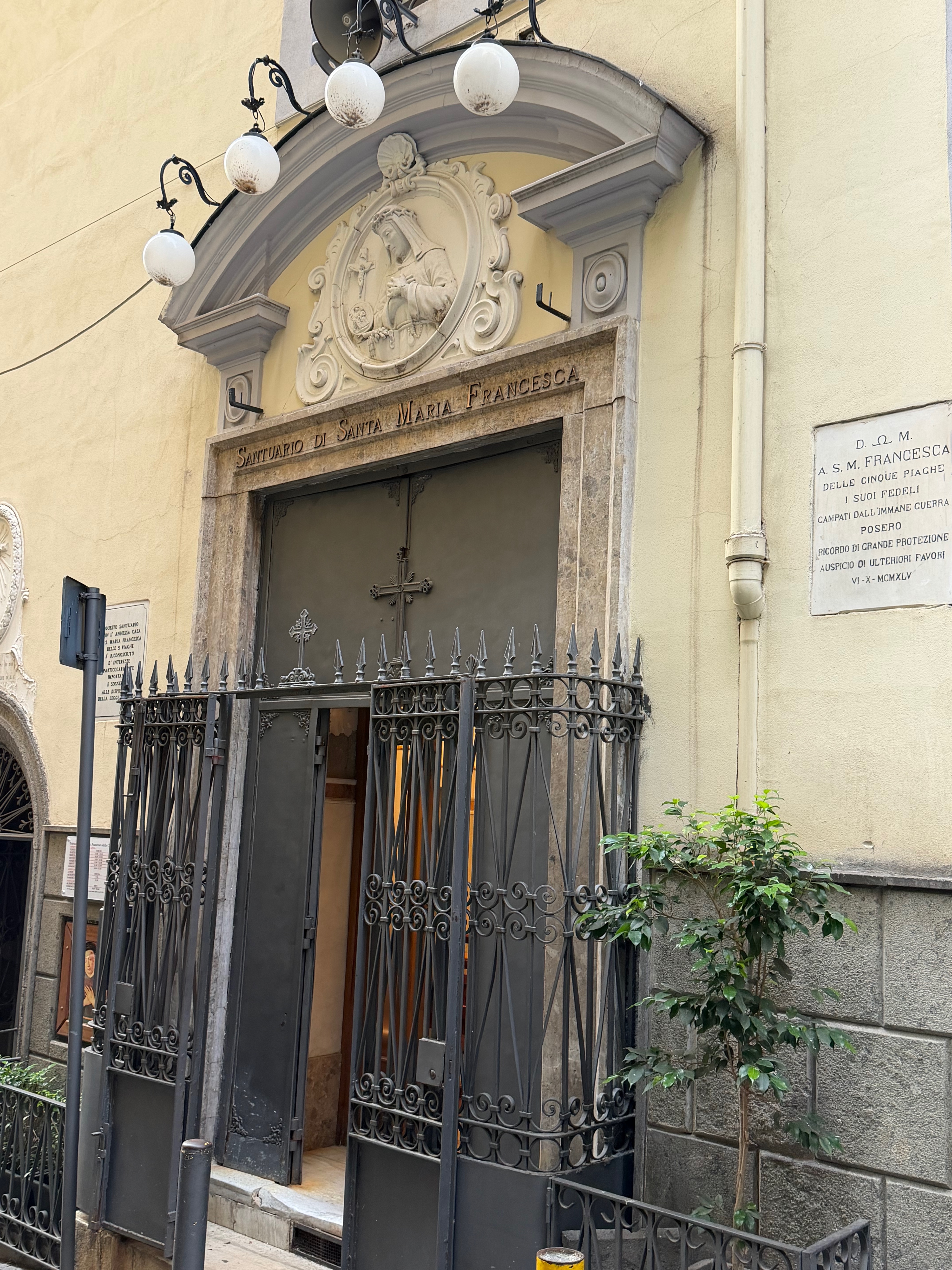
Monastery of Saint Maria Francesca in Naples: A Hidden Gem in the Spanish Quarter
Most visitors come to Naples looking for its famous landmarks, bustling piazzas and world-renowned pizza. Yet some of the city's most memorable places are hidden behind unassuming doorways, tucked away in streets that many tourists simply walk past.
The Monastery of Saint Maria Francesca is one of those places.
Located in the heart of the Spanish Quarter, just a few steps from Via Toledo, this small sanctuary offers a completely different perspective on Naples. It is not a grand basilica filled with masterpieces or a monument crowded with tour groups. Instead, it is a place where local traditions, faith and everyday life have been intertwined for more than two centuries.
For travellers looking to experience a quieter and more authentic side of the city, this is one of Naples' most rewarding hidden gems.
| Quick Facts | |
|---|---|
| Location | Spanish Quarter, Naples |
| Address | Vico Tre Re a Toledo 13 |
| Admission | Free |
| Suggested visit | 20–30 minutes |
| Best for | Hidden gems, local traditions and religious heritage |
| Walking distance from Hotel Il Convento | Less than one minute |
Why Visit the Monastery of Saint Maria Francesca?
If you're exploring the Spanish Quarter, it's easy to focus on its colourful streets, lively atmosphere and famous murals. However, stepping inside the Monastery of Saint Maria Francesca reveals another side of the neighbourhood—one that is quieter, deeply spiritual and rooted in centuries of local tradition.
This is one of the few places in Naples where visitors can enter the actual home of a saint. Unlike many historic churches that have evolved over the centuries, the monastery has preserved the intimate atmosphere of a private residence. Walking through its rooms feels less like visiting a museum and more like stepping into someone's home.
Whether you're interested in history, religious heritage or simply discovering places that most visitors overlook, the monastery offers an experience unlike any other in Naples.
What Makes This Place So Special?
The monastery is closely connected to Saint Maria Francesca of the Five Wounds, one of Naples' most beloved religious figures. Her life, marked by humility, prayer and compassion, continues to inspire thousands of pilgrims every year.
Unlike the city's monumental churches, this sanctuary preserves a remarkably personal atmosphere. The modest rooms, original furnishings and peaceful silence create an emotional connection that many visitors find unexpectedly moving, regardless of their religious beliefs.
Perhaps even more remarkable is its relationship with the surrounding neighbourhood. The Spanish Quarter has always been a place where faith is woven into everyday life. Small shrines, religious images and family traditions still characterise its narrow streets, making the monastery feel like a natural extension of the community rather than a separate historical monument.
What You'll See During Your Visit
Although relatively small, the monastery contains several rooms that have remained largely unchanged since Saint Maria Francesca lived here during the eighteenth century.
Visitors can explore:
- the saint's modest bedroom;
- the small prayer room where she spent many hours in meditation;
- her original personal belongings;
- the private chapel;
- areas of the convent that are still occupied by the Franciscan sisters today.
Everything about the monastery reflects simplicity. There are no lavish decorations or impressive works of art. Instead, its greatest value lies in its authenticity. It offers a rare opportunity to understand how one of Naples' most revered saints actually lived.
The Famous Fertility Chair
The monastery is known throughout Italy for one particular tradition: the Chair of Saint Maria Francesca.
According to local belief, women hoping to have children sit on the chair once used by the saint while a nun recites a special prayer. This tradition has been observed since the nineteenth century and continues to attract thousands of pilgrims from across Italy and abroad every year.
For believers, the chair represents hope and faith. For others, it offers a fascinating insight into Naples' living traditions, where religious devotion remains deeply connected to everyday life.
Whether or not you share these beliefs, witnessing this centuries-old custom provides a unique understanding of the city's spiritual identity.
Who Was Saint Maria Francesca?
Born in Naples in 1715 as Anna Maria Rosa Nicoletta Gallo, Saint Maria Francesca of the Five Wounds is one of the city's most beloved religious figures. She is also recognised as the first female saint from Naples.
From an early age, she chose a life of prayer, humility and service. She joined the Franciscan Third Order and spent almost her entire life in the modest house that today forms part of the monastery.
Despite living a secluded life, her reputation for compassion and spiritual guidance spread throughout Naples. People from every social background visited her seeking comfort, advice and prayers during difficult moments.
Nearly three centuries later, many Neapolitans still feel a personal connection to her. Rather than being remembered as a distant historical figure, she remains a familiar presence in the city's collective memory.
A Brief History of the Monastery
The building itself was originally Saint Maria Francesca's home. After her death in 1791, it gradually became a place of pilgrimage as devotion to the saint continued to grow.
Unlike many churches in Naples, the monastery has never lost its domestic character. Its rooms have been carefully preserved, allowing visitors to experience an atmosphere that feels remarkably authentic.
This simplicity is part of its charm. While Naples is famous for magnificent churches such as the Cathedral or the Church of Gesù Nuovo, the Monastery of Saint Maria Francesca tells a different story—one of everyday faith rather than architectural grandeur.
Today, the monastery remains an active place of worship cared for by Franciscan sisters, ensuring that it continues to be both a spiritual destination and a living part of the neighbourhood.
A Living Tradition in the Spanish Quarter
It is impossible to separate the monastery from the Spanish Quarter itself.
Founded during the sixteenth century under Spanish rule, the neighbourhood has always been characterised by a strong sense of community. Faith here is not confined to churches. It spills out into the streets through roadside shrines, religious icons, small altars and centuries-old traditions that remain part of everyday life.
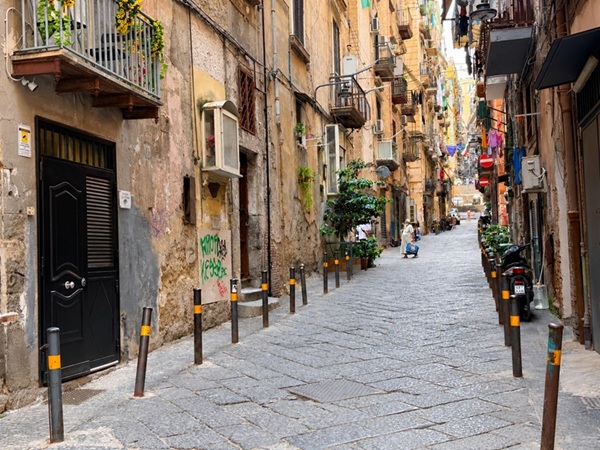
This close connection between home, street and everyday life can also be seen in the Neapolitan bassi, the traditional street-level homes that are one of the most characteristic features of the Spanish Quarter.
The Monastery of Saint Maria Francesca perfectly reflects this spirit. While thousands of visitors come to the Spanish Quarter to see its colourful streets and famous murals, many locals continue to visit the monastery simply to light a candle, say a prayer or spend a few quiet moments away from the city's busy rhythm.
It is this coexistence of daily life and deep-rooted tradition that makes the monastery feel so authentic.
Visitor Information
The monastery is open to visitors throughout most of the year, although opening hours may vary depending on religious services and special celebrations.
- Admission: Free
- Recommended visit: 20–30 minutes
- Dress code: As this is an active place of worship, modest clothing is recommended.
- Photography: Photography may be restricted inside certain rooms, so always follow the instructions provided by the sisters.
Before your visit, it is worth checking current opening hours, especially if you plan to visit during religious holidays or on the saint's feast day, when the monastery attracts a larger number of pilgrims.
How to Get There
The monastery is located at Vico Tre Re a Toledo 13, in the heart of Naples' Spanish Quarter.
If you're staying at Hotel Il Convento, one of the advantages is that the monastery is literally on your doorstep. Simply step outside the hotel and you'll find yourself just a few metres from one of Naples' most fascinating places of worship.
Visitors staying in other parts of the city can easily reach the monastery on foot from Via Toledo or by using Toledo Metro Station, which is only a short walk away.
Local Tip
Visit early in the morning if possible. The monastery is particularly peaceful before the Spanish Quarter becomes busy with visitors. Afterwards, take your time wandering through the surrounding streets, stopping at one of the neighbourhood's traditional cafés before continuing towards Via Toledo or the Quartieri Spagnoli murals.
Frequently Asked Questions
Where is the Monastery of Saint Maria Francesca?
The monastery is located at Vico Tre Re a Toledo 13, in the Spanish Quarter of Naples, just a short walk from Via Toledo.
Is there an entrance fee?
No. Admission is free, although donations are welcome to help preserve the monastery.
How long does the visit take?
Most visitors spend between 20 and 30 minutes exploring the monastery.
Why is the monastery famous?
It is best known as the home of Saint Maria Francesca and for the centuries-old tradition of the fertility chair, which continues to attract pilgrims from across Italy.
Is it worth visiting even if I'm not religious?
Absolutely. Beyond its religious significance, the monastery offers a unique insight into the history, traditions and everyday life of Naples. Its intimate atmosphere makes it one of the city's most authentic hidden gems.
What can you see near the Monastery of Saint Maria Francesca?
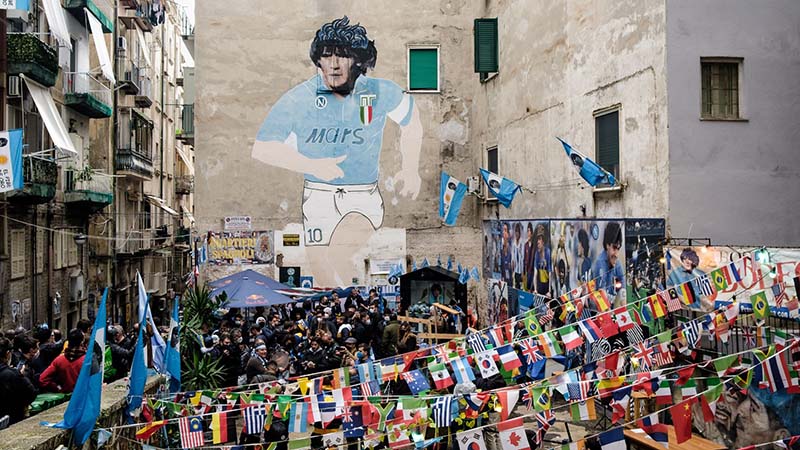
The monastery is located in the heart of the Spanish Quarters, making it easy to combine the visit with a walk through the neighbourhood. Nearby you can explore Via Toledo and visit the Maradona Mural, one of the most famous landmarks in the Spanish Quarters.
Why This Hidden Sanctuary Deserves a Place on Your Itinerary
Naples reveals itself gradually. Beyond its castles, museums and famous landmarks lies a network of places that tell quieter, more personal stories.
The Monastery of Saint Maria Francesca is one of those places.
Whether you visit out of curiosity, for its religious importance or simply to discover a different side of the Spanish Quarter, you'll leave with a deeper understanding of the city's traditions and the enduring relationship between faith and everyday life.
Sometimes, the most memorable experiences in Naples aren't found in its largest monuments. They're hidden behind an ordinary doorway, waiting for those willing to slow down and step inside.