DE
 ES
 FR
 EN
 IT


In Naples, discovering something special often means looking up. Above the doorway of a ground-floor home, on the corner of a building or along a staircase, you may notice a small niche containing an image of the Virgin Mary, a saint, flowers or a flickering light. These are the city's votive shrines, often simply called “'e cappelle” by people living in the Spanish Quarter.
They are not all ancient, and no two are exactly alike. Some contain paintings or small statues; others display photographs, devotional cards and memories of loved ones who have passed away. Their appearance changes with the street and the people who look after them. That is why they are worth noticing during a walk: they reveal a side of Naples that you will not find among its most famous monuments.
Naples' Votive Shrines at a Glance
- What they are: small religious niches, sacred images and street-side altars.
- Where to find them: the Spanish Quarter (Quartieri Spagnoli) and Naples' historic centre.
- Where to start: Hotel Il Convento on Via Speranzella, or Via Toledo.
- Suggested time: around one hour for a walk through the Spanish Quarter.
- Admission: shrines visible from public streets can be viewed free of charge.
- Local tip: look above doorways, at building corners and along staircases.
What Are Votive Shrines?
A votive shrine is a small space dedicated to a sacred image, usually placed on the façade of a building, in a courtyard or at a street intersection. It may originate from personal devotion, a religious vow or the desire to remember someone.
Not all of these shrines are dedicated exclusively to Catholic religious figures. Some commemorate deceased family members, while others are dedicated to Diego Armando Maradona, whose image has a special place in Naples' popular culture.
Throughout Naples, these shrines form a widespread and constantly evolving heritage. Some have existed for centuries, while others are much more recent.
Look closely and you will notice signs of everyday care: fresh flowers, small lights and repaired frames. These simple details reveal the relationship between local residents and the streets where they live.
Why Are There So Many Votive Shrines in Naples?
Votive shrines originally reflected a desire for devotion and protection. During the eighteenth century, however, they also served a practical purpose.
A Dominican friar known as Father Rocco encouraged the placement of sacred images at strategic points throughout the city and invited residents to keep them illuminated. The small oil lamps helped light streets that would otherwise have remained dark at night.
Although that practical function has disappeared, many of the shrines remain. Today they stand alongside shops, hanging laundry, voices coming from open windows and the everyday movement of neighbourhood life.
Stay in the Heart of Naples' Spanish Quarter
At Hotel Il Convento, stay in a traditional Neapolitan building in the heart of the Spanish Quarter, just a short walk from Via Toledo and the city's main attractions.
BOOK NOWWhere to See Votive Shrines in the Spanish Quarter
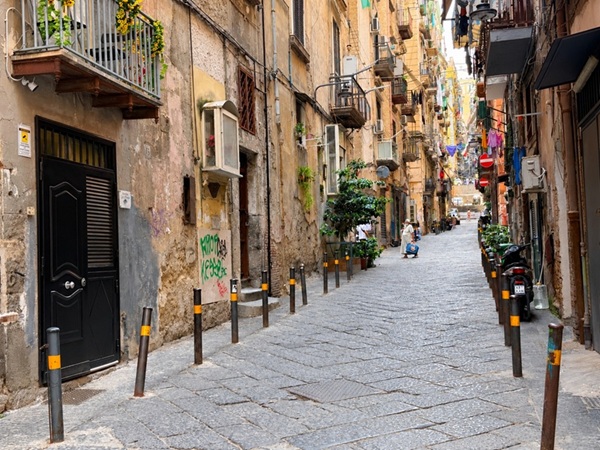
The Spanish Quarter (Quartieri Spagnoli) is one of the best places to discover Naples' traditional street shrines.
Starting from Hotel Il Convento on Via Speranzella, explore the narrow streets climbing uphill from Via Toledo. There is no need to follow a fixed list of addresses. Instead, look at building corners, above doorways and into entrance halls visible from the street.
Here, votive shrines are part of the neighbourhood's everyday landscape. Some are dedicated to the Virgin Mary or Catholic saints, while others preserve the memory of loved ones.
During your walk, you can also visit Vico Tre Re a Toledo, where you will find the small sanctuary of Santa Maria Francesca delle Cinque Piaghe, a religious figure closely associated with the Spanish Quarter.
Although this sanctuary is different from a street-side votive shrine, it helps visitors understand how deeply religious devotion is woven into the neighbourhood's history and daily life.
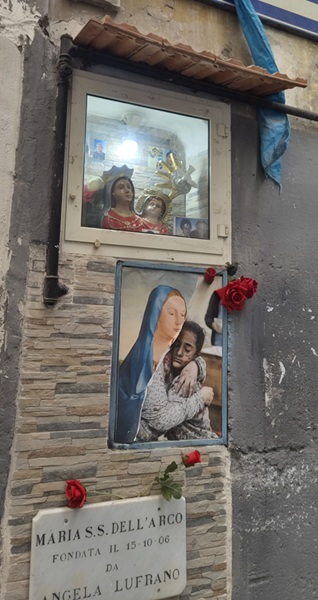
Votive Shrines of the Spanish Quarter: Photo Gallery
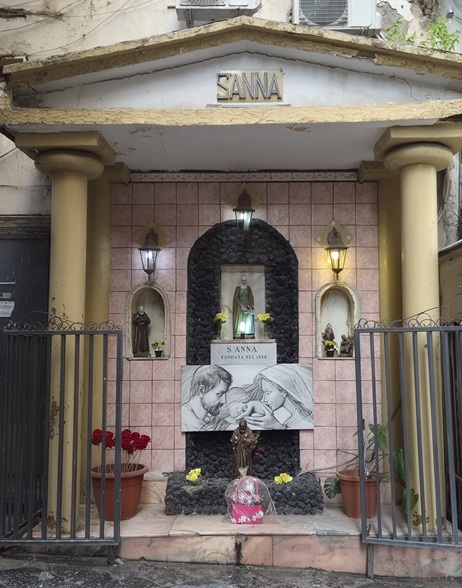
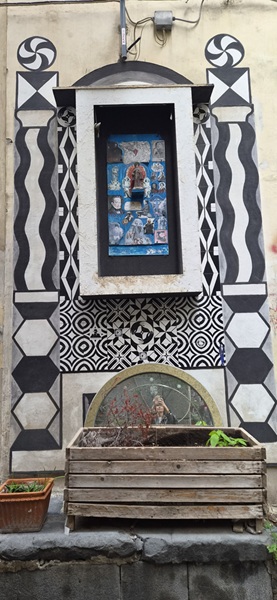
The following photographs show some of the many forms these shrines can take, from small niches and decorated frames to sacred images protected by glass and altars built into the façades of historic buildings.
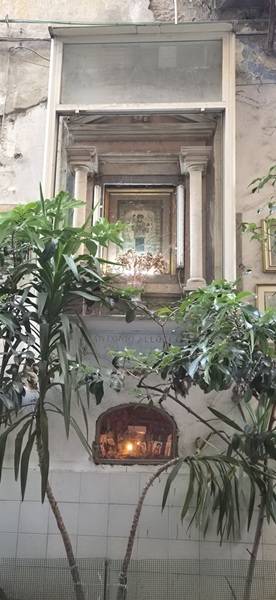
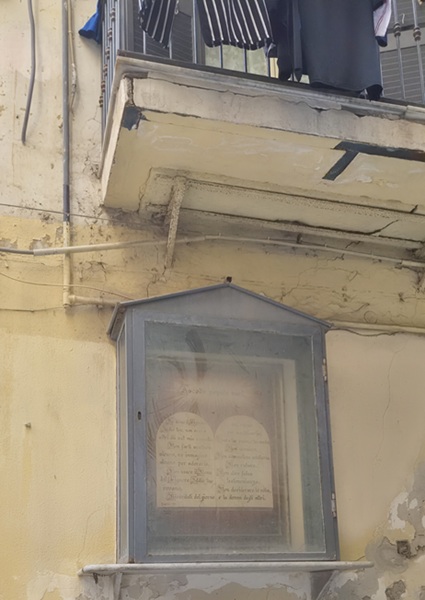
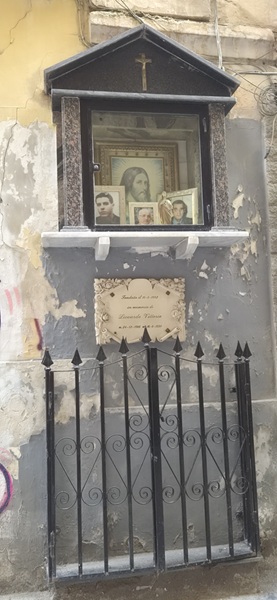
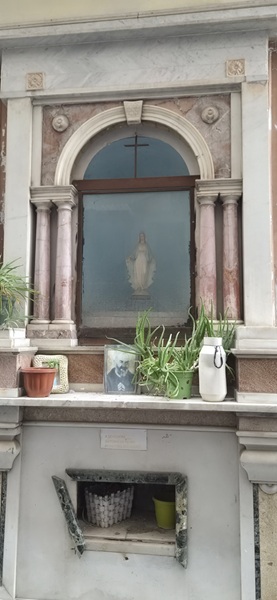
Photographs: Hotel Il Convento. Click on an image to enlarge it.
From the Spanish Quarter to Naples' Historic Centre: A Walking Route
To continue your walk, head downhill towards Via Toledo and reach Piazza Dante. From here, explore the historic centre along Via dei Tribunali, paying attention to building façades and street corners rather than just shop windows.
You can continue towards San Gregorio Armeno and Via Duomo.
This is not a route with numbered stops. Votive shrines are scattered throughout Naples, sometimes hidden in unexpected places, and their appearance may change over time.
Allow yourself to turn into a side street or pause at a quiet intersection. Often, that is where you will notice a shrine you might otherwise have missed.
If you are interested in Naples' relationship with remembrance and the souls of the deceased, you can also visit the Church of Santa Maria delle Anime del Purgatorio ad Arco along Via dei Tribunali.
Although this is a different type of religious site, it offers insight into the Neapolitan tradition of devotion to the souls in Purgatory, a theme also associated with the Fontanelle Cemetery.
Practical Information for Your Walk
- Starting point: Hotel Il Convento in the Spanish Quarter, or Via Toledo.
- Suggested time: approximately one hour in the Spanish Quarter, with extra time if you continue towards Via dei Tribunali and Via Duomo.
- Tickets and opening hours: shrines visible from public streets can be viewed freely. Churches and sanctuaries may have their own visiting hours and admission rules.
- Respect local residents: take photographs discreetly. Some shrines stand close to private homes and remain places of prayer for people living in the neighbourhood.
A Local Tip from Hotel Il Convento
Do not look only for the largest or most elaborate shrines. Sometimes the most interesting ones are easy to miss: a small image above a doorway, a flickering light or flowers left by a local resident.
Start from Via Speranzella, where Hotel Il Convento is located, and take your time observing the details. It is one of the most rewarding ways to explore the Spanish Quarter.
Frequently Asked Questions About Naples' Votive Shrines
Are votive shrines miniature churches?
No. They are small niches or altars placed in public spaces. Some are richly decorated, while others are very simple.
Where can you find the most votive shrines in Naples?
They can be found throughout the city. The Spanish Quarter and the streets of Naples' historic centre are particularly interesting places to explore them on foot.
Do you need a guide to find them?
No. You can discover many of them simply by walking and paying attention to building façades. A local guide may help explain the documented history of individual shrines.
Can you photograph votive shrines?
Shrines visible from public streets can generally be photographed. Avoid entering private courtyards without permission and respect residents and people praying nearby.
Naples' votive shrines invite visitors to slow down. In the Spanish Quarter, where they seem to appear around almost every corner, they offer a reason to stop, look up and discover new details in streets you thought you already knew.
Discover Naples Through Its Historic Streets
Stay at Hotel Il Convento in the heart of the Spanish Quarter and explore Naples' traditions, history and most characteristic neighbourhoods on foot.
BOOK NOW