RU
RU  ES
ES  FR
FR  EN
EN  IT
IT 

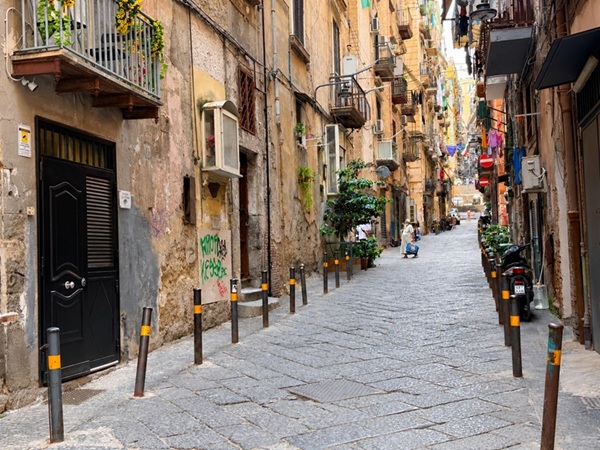
What are the Neapolitan bassi? Explore the Spanish Quarter and discover ‘o vascio, the traditional street-level home that tells a fascinating story about everyday life in Naples.
AT A GLANCE
What they are: small street-level homes with an entrance opening directly onto the street.
What they are called in Naples: ‘o vascio in the singular and ‘e vasci in the plural.
Where to see them: especially in the Spanish Quarter, but also in the Sanità, Vergini and other parts of Naples’ historic centre.
How to recognise them: a door or French window opening directly onto the alley, very compact interiors and a close relationship between home and street.
Can you visit them? Many bassi are still private homes, while others have been converted into workshops, shops, restaurants, holiday rentals and B&Bs.
A useful tip: notice them as you walk through the neighbourhood, remembering that many of the doors you see belong to real private homes rather than tourist attractions.
There are places in Naples that make you look up: churches, palaces, domes and balconies.
To understand the Spanish Quarter, however, sometimes you need to look lower.
Right at street level.
This is where you will find the Neapolitan bassi, known locally as ‘e vasci: small homes built into the ground floors of old buildings, often consisting of just one or two rooms, with a door opening directly onto the alley.
They are one of the most recognisable features of the Spanish Quarter. But seeing them simply as something picturesque would miss the point: these small spaces tell an important part of Naples’ social history.
What is a Neapolitan basso?
A basso is generally a home located on the ground floor of a building, at street level or sometimes slightly below it.
Its most distinctive feature is direct access from the alley. In many cases, the front door is also one of the main sources of natural light and ventilation.
Traditionally, the interiors are very compact: one or two rooms where, especially in the past, the kitchen, sleeping area and family life all shared the same limited space.
This layout helped create one of the most characteristic features of everyday life in Naples’ popular neighbourhoods:
the home ends at the doorstep, and the alley almost begins inside it.
Chairs placed outside, conversations from one doorway to another, laundry, children playing and everyday household activities all become part of the street scene. When private space is limited, the public space outside naturally becomes an extension of the home.
This close connection between indoors and outdoors can still be seen today while walking through the Spanish Quarter.
How did the bassi of Naples develop?
The history of the bassi is closely linked to the growth and density of Naples.
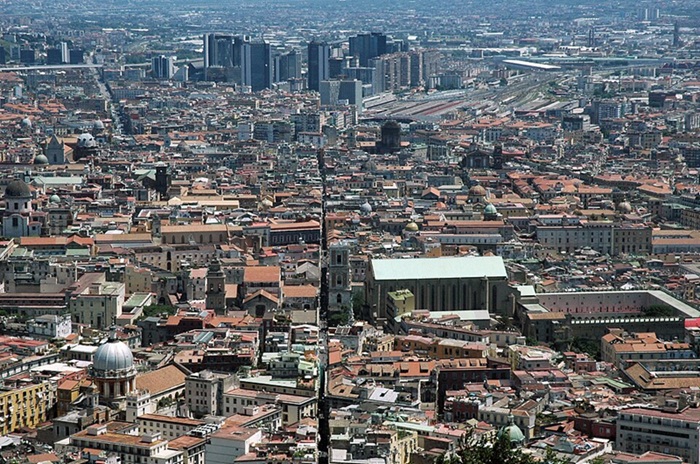
The Spanish Quarter was developed in the 16th century during the rule of Pedro de Toledo, when the area behind present-day Via Toledo took on the dense grid of narrow streets that still defines the neighbourhood today.
At the same time, Naples continued to grow and attract new residents.
And space was limited.
Over time, ground-floor rooms, storage spaces and workshops began to be used as homes as well. For artisans and small traders, home and workplace could even occupy the same space.
This idea is summed up by an old Neapolitan expression: “casa e puteca”, meaning home and workshop together.
Over the centuries, bassi became one of the most characteristic forms of housing in Naples’ working-class neighbourhoods.
More than just folklore
Today, the basso often fascinates visitors because it seems to capture the street life that makes some parts of Naples so distinctive.
Its history, however, was not always picturesque.
For many years, living in a basso often meant dealing with damp conditions, little natural light, overcrowding and poor sanitation.
By the 19th century, housing conditions in Naples’ poorer districts had become a major social issue and, after the devastating cholera epidemic of 1884, they became part of the debate that led to the large-scale urban redevelopment known as the Risanamento di Napoli.
To understand the scale of the phenomenon, one figure is enough: by the end of the 19th century, more than 100,000 people in Naples were living in bassi.
These homes were therefore not an architectural curiosity, but above all a response to overcrowding, limited space and the difficult economic conditions faced by part of the city’s population.
The basso in Neapolitan literature and theatre
A place so closely connected to everyday popular life inevitably found its way into literature and theatre.
Matilde Serao, in Il ventre di Napoli, described the difficult living conditions of Naples’ poorer neighbourhoods and a domestic life in which many different activities had to take place within the same small space.
Many years later, Eduardo De Filippo brought this same world to the stage.
In Napoli milionaria!, the home of the Jovine family belongs to this social universe: a domestic space constantly crossed by neighbours and by what is happening in the street outside.
The basso therefore becomes much more than a simple setting. It becomes part of the story Naples tells about itself.
The open door: where does the home end and the alley begin?
Walk through the Spanish Quarter today and you will still see many bassi with their doors open.
Historically, there was first of all a practical reason for this: opening the door allowed air and light into rooms that often had very few other openings.
But over time, the doorway also took on an important social role.
The boundary between private and public space becomes much less obvious. A chair outside the entrance, a conversation between neighbours, a small table or a few plants can transform a few metres of alley into an extension of the home.
In summer, this connection becomes even more visible.
When the weather is hot, it is common to see residents sitting outside their homes, looking for a little more air, a little more space and a place to spend time together.
The alley can almost become an outdoor living room: neighbours chat, people greet those passing by and it is not unusual for a visitor to stop and exchange a few words with someone sitting outside a basso.
And sometimes a simple conversation may even end with an invitation to have a coffee.
These spontaneous encounters are impossible to plan, but they say a great deal about the sociability and hospitality associated with everyday life in Naples.
Do bassi still exist in the Spanish Quarter?
Yes, and you will see many of them while walking through the neighbourhood.
Of course, they are not all the same as the homes described in the 19th and early 20th centuries.
Many have been renovated and are still used as private homes. Others have completely changed function and are now artisan workshops, small shops, bars, restaurants, holiday rentals and B&Bs.
Tourism has accelerated this transformation in recent years, especially in the streets closest to Via Toledo.
As a result, two almost identical doorways can now lead to very different places: one may still be a family home, while the next may be a business or tourist accommodation.
Where to see the bassi in the Spanish Quarter
There is no single famous basso that you need to find on a map.
And that is probably part of their charm.
The best way to notice them is simply to walk slowly through the Spanish Quarter, leaving the busiest streets every now and then and exploring the smaller alleys.
A particularly interesting area is the one between Via Toledo, Via Speranzella, Vico Lungo Gelso, Montecalvario and the Gradini San Liborio.
Via Speranzella and Vico Lungo Gelso run through the heart of the neighbourhood, where old buildings, small businesses and street-level homes follow one another along the narrow streets.
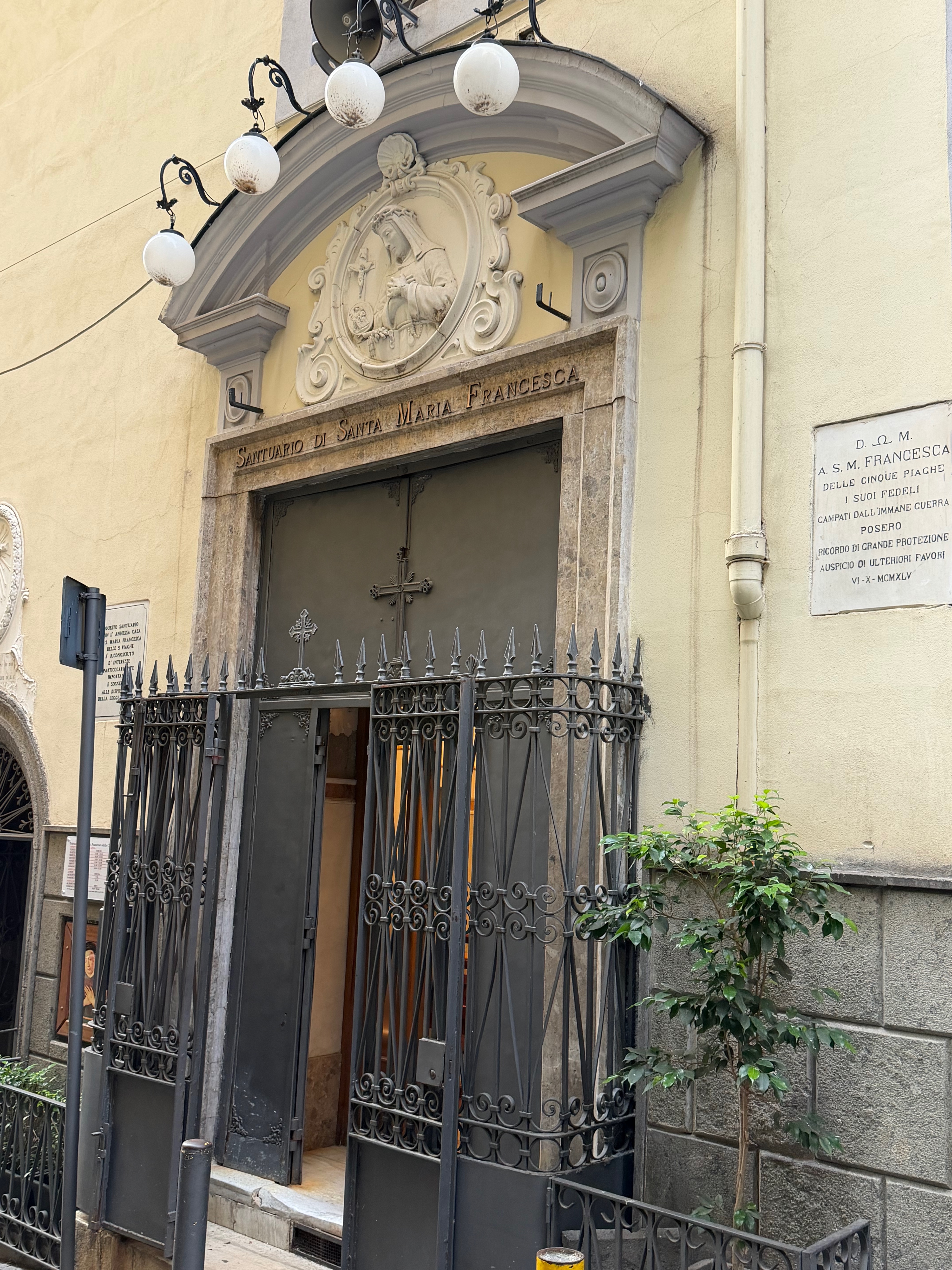
As you continue through these alleys, you can also visit the Monastery of Saint Maria Francesca, one of the most distinctive places in the Spanish Quarter and a site closely connected to the neighbourhood’s religious and everyday life.
Around the Gradini San Liborio, the scene changes again: steps, bassi, hanging laundry, small religious shrines and street art come together to create some of the neighbourhood’s most characteristic views.
In this area you can also find a mural dedicated to Filumena Marturano, played by Sophia Loren in the film Marriage Italian Style, a reference that immediately recalls the popular world portrayed by Eduardo De Filippo.
The bassi today: everyday life and tourism
In recent years, the Spanish Quarter has become one of the most visited areas of Naples.
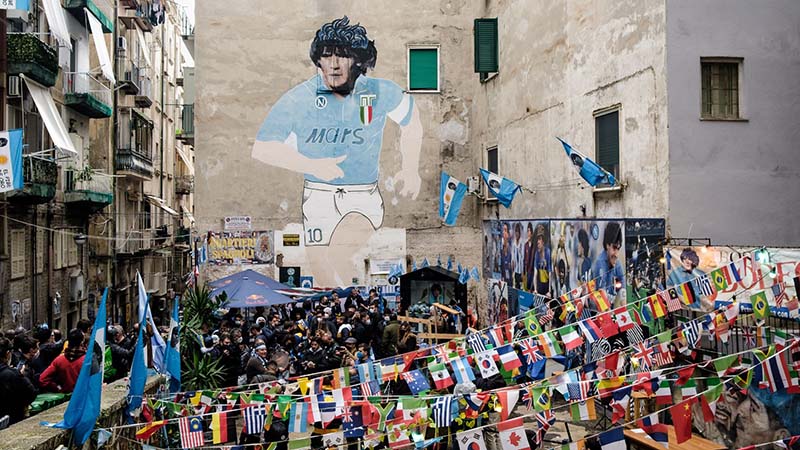
Alleys that once remained outside the main tourist routes are now crossed every day by visitors from all over the world. Restaurants, small businesses, street art and the popularity of the Maradona Mural in the Spanish Quarter have all helped transform the way the neighbourhood is seen.
The bassi are part of this transformation too.
Some have become shops, businesses or tourist accommodation. Others simply remain the homes of people who have always lived in the neighbourhood.
This mixture of old and new is one of the most interesting things about seeing how the Spanish Quarter is changing today.
A basso is first and foremost a home
An open doorway directly onto the alley can be fascinating, especially for visitors from places where the boundary between private and public space is much clearer.
But there is one simple thing worth remembering: an inhabited basso is not a tourist attraction. It is a real private home.
That does not mean there has to be distance between visitors and residents.
On the contrary, one of the nicest experiences in the Spanish Quarter may be a conversation that starts naturally, a greeting or an unexpected encounter with someone who lives there.
It is simply the difference between meeting the neighbourhood and entering someone’s private space.
A small home that tells the story of a great city
The bassi tell the story of poverty and overcrowding in the past, but they also tell the story of artisans, families, life lived on the doorstep and the unusual relationship between private and public space that is still visible in the Spanish Quarter today.
That is why, during your walk, it is worth moving away from the busiest routes for a few minutes.
Leave Via Toledo, take one of the alleys climbing towards Montecalvario and look at what is happening at street level.
An open door. A chair outside the entrance. A tiny workshop. A kitchen glimpsed for a moment. A former basso turned into a shop and, just a few metres further on, another one that is still someone’s home.
This is also how the Spanish Quarter tells the story of Naples.